
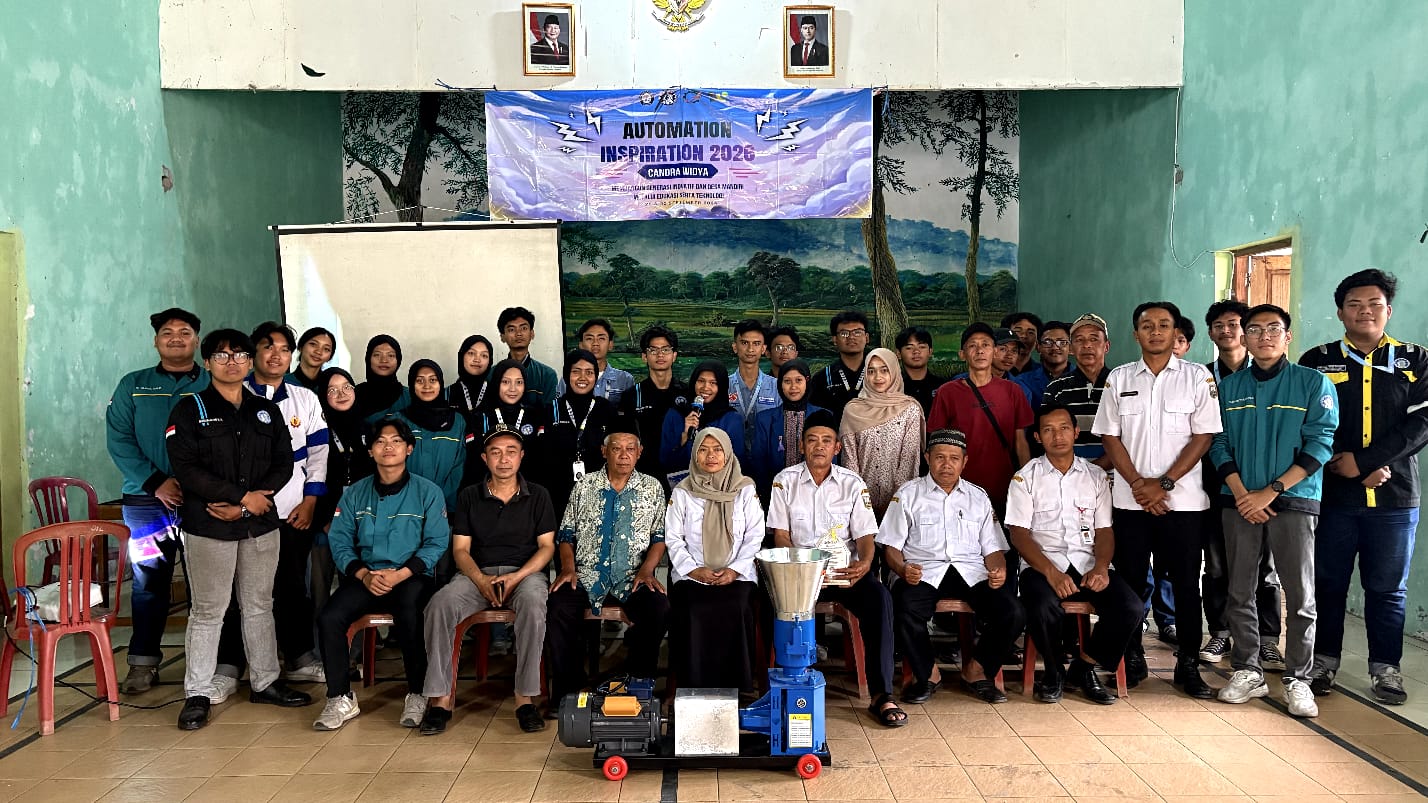
The SDGs Student Group of the Automation Engineering Technology Study Program (TRO), Vocational School, Diponegoro University, held a community service activity titled “Application of Automatic Duck Feed Pellet Machine Technology to Improve Food Security” on Wednesday, September 30, 2026, in Losari Hamlet, Sumowono Village, Semarang Regency. The activity targeted laying duck farmers and local BUMDes (village-owned enterprise) managers, aiming to reduce operating costs and improve the efficiency of their livestock businesses.

Figure 1. Group photo with the BUMDes Management
The program is a tangible contribution by students to the Sustainable Development Goals (SDGs), particularly SDG 1 (No Poverty), SDG 2 (Zero Hunger), SDG 8 (Decent Work and Economic Growth), and SDG 12 (Responsible Consumption and Production). By introducing appropriate technology, the students offer a solution to farmers’ heavy dependence on expensive commercial, factory-made feed.
Figure 2. Presentation of the Duck Feed Equipment Material
During the activity, farmers received outreach on the importance of feed self-sufficiency, training on feed formulation using local raw materials, and instruction on operating and maintaining the automatic duck feed pellet machine. Beyond receiving technical material, participants were also invited to take part directly in hands-on mixing and molding sessions to produce pellets with more even, homogeneous nutritional quality.
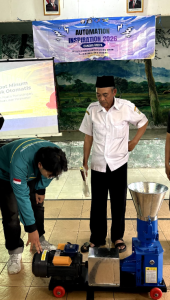
Figure 3. Explanation of how the equipment works to residents
Through this appropriate technology program, the students hope that the farmer partners and BUMDes Losari will not only be able to cut feed production costs, but also gain technical skills that are more independent, competitive, and sustainable.The activity was held with great enthusiasm. Farmers and BUMDes Losari managers actively joined every session, from the presentation of materials and technical discussions on the machine’s specifications to a live trial of the pellet machine at the farm site. This educational and solution-oriented atmosphere is expected to foster effective, modern livestock management practices.
This synergy between the university and the community is concrete proof of students’ active involvement in applying science and automation technology to achieve a self-reliant, productive, and sustainable village.